1. What Drives the Price of a Commercial Replacement
Square footage gets the headlines, but six other factors swing the total just as hard.
- Membrane or panel type (TPO, EPDM, PVC, modified bitumen, standing seam metal)
- Insulation R-value required by current energy code
- Deck condition once the old roof comes off
- Number of penetrations: drains, curbs, vents, skylights, HVAC units
- Parapet height, edge metal, and coping detail
- Tear off and disposal versus recover over the existing system
A simple 20,000 sq ft warehouse with a clean deck and few penetrations sits at the low end. A multi level medical office with dozens of curbs and a rotted deck sits at the high end.
Two other variables quietly inflate budgets in Munster: building height and roof access. A single story warehouse with ground level dumpster staging is far cheaper to re roof than a four story office where every bundle of insulation rides a boom lift. Tight urban lots, shared parking, and active tenants below all add labor hours that show up in the bid.
2. Realistic Cost Ranges for Munster Buildings
Pricing below reflects typical Munster commercial work in 2025 and 2026. Your bid will land somewhere in these bands depending on the variables above.
For a deeper breakdown of per square foot variables, see our guide on commercial roofing cost per square foot.
A few quick reference points on how those ranges play out at common building sizes:
- 15,000 sq ft TPO retail strip: roughly $105,000 to $150,000 installed
- 30,000 sq ft EPDM warehouse: roughly $180,000 to $270,000 installed
- 50,000 sq ft PVC restaurant or grocery: roughly $450,000 to $700,000 installed
- 40,000 sq ft standing seam metal manufacturing: roughly $480,000 to $720,000 installed
10. Questions to Ask Every Bidder
- Who is the manufacturer and what warranty term is included?
- Is the crew employed or partnered?
- How is rotted deck priced if discovered mid job?
- What is the dry in plan at end of each workday?
- How are change orders documented and approved?
- Can you provide three local references on similar buildings?
- What does the punch list and final walk process look like?
- Who registers the warranty and when do I receive the certificate?
A replacement is a seven figure decision on many Munster buildings. The right contractor will welcome every one of these questions and answer them in writing.
7. Protecting the Interior During the Job
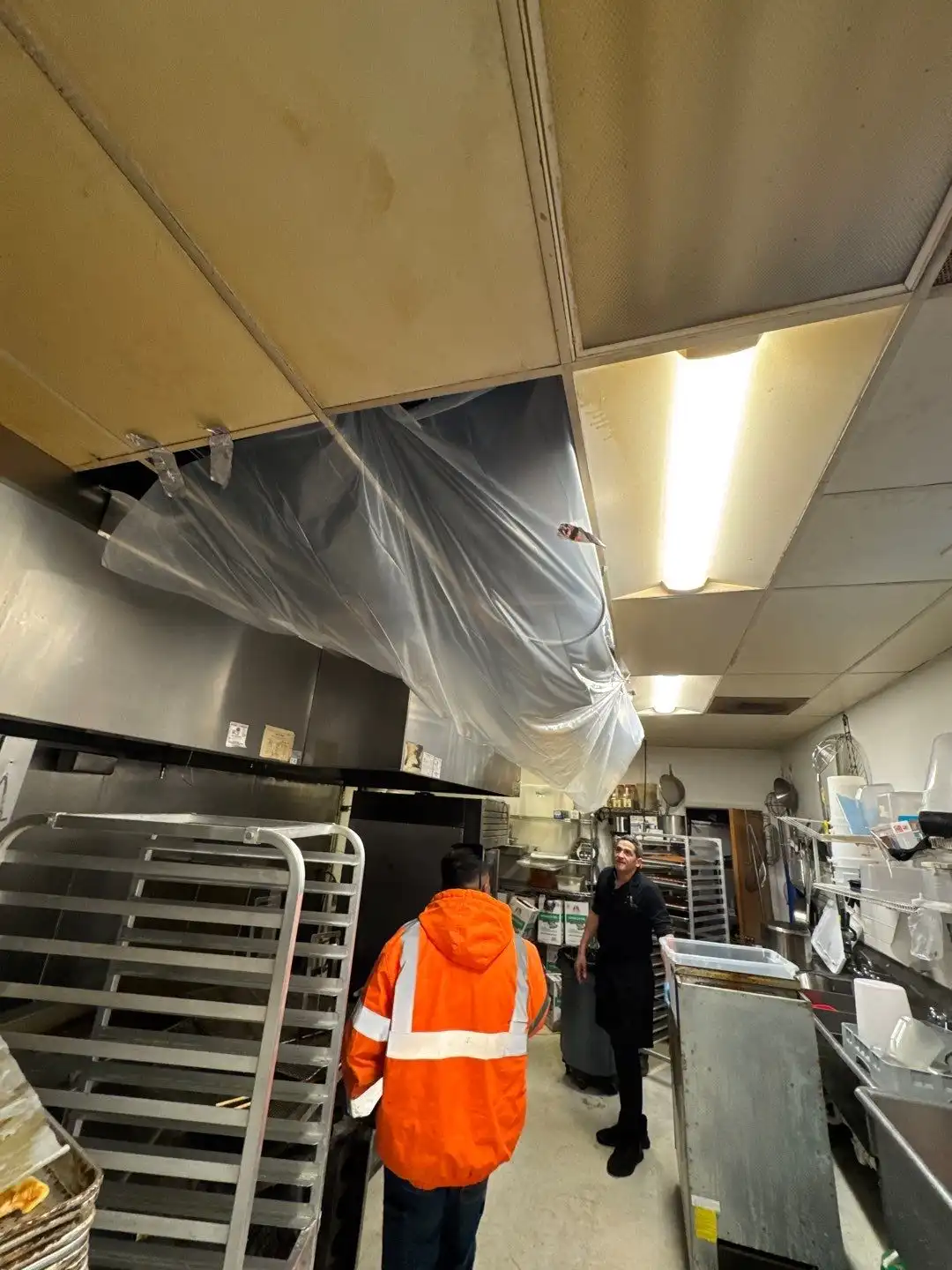
Tear offs expose the deck. A surprise storm can dump water into the building if the crew is not disciplined about dry in. Munster Commercial Roofing sequences work so no more area is open than the crew can button up before end of day. If a leak does sneak through, our restoration division handles commercial roof repair and interior drying under one roof, so you are not chasing two contractors.
A few practices that separate disciplined crews from sloppy ones:
- Daily weather monitoring with a defined cutoff for opening new area
- Night tie ins with mechanically fastened temporary membrane, not just plastic sheeting
- Interior protection over inventory, sensitive equipment, and finished ceilings
- Magnetic sweeps of parking lots and loading docks at end of each shift
- Daily photo logs shared with the property manager
6. What a Complete Munster Commercial Roofing Quote Includes
- Square footage measured from drone and on roof verification
- System specification with manufacturer and thickness
- Insulation R-value and tapered design where needed
- Tear off, disposal, and dumpster logistics
- Flashing, edge metal, drain retrofits, and walk pads
- Manufacturer warranty term and contractor workmanship warranty
- Payment schedule and projected start and finish dates
If a bid is missing any of these, ask why before comparing dollars.
9. Warranties Worth Paying For
Warranty length is a marketing number. The real value is in what the document covers and who stands behind it.
- Manufacturer NDL (no dollar limit) warranties of 20 to 30 years on single ply systems
- Wind uplift coverage rated for the exposure category of your site
- Workmanship warranty from the contractor of at least 2 to 5 years
- Annual or biennial inspection requirements clearly spelled out
- Transferability if you sell the building within the warranty term
8. Planning Around Tenants and Operations
The cheapest roof is the one that does not shut down your business. Before signing, walk the operations side of the project with the bidder.
- Identify noise sensitive tenants (medical, dental, call centers) and schedule loud work around them
- Map crane and lift staging so loading docks stay open
- Confirm hours allowed by lease, HOA, or municipal ordinance
- Notify tenants two weeks in advance with a written schedule
- Plan odor control if the system uses hot asphalt or adhesives
For occupied buildings, weekend or off hours work can be worth the premium. A 10 to 15 percent labor uplift often beats the cost of lost productivity or angry tenants threatening to break a lease.
3. The Timeline, Phase by Phase
Owners often expect a faster turnaround than reality allows. Here is what an honest schedule looks like.
- Phase 1, inspection and scoping: 1 to 3 days on site, plus 3 to 5 days for the written proposal
- Phase 2, contract and material order: 2 to 6 weeks depending on membrane lead time
- Phase 3, mobilization and tear off: 1 to 4 days for a typical 20,000 to 40,000 sq ft roof
- Phase 4, insulation and membrane install: 1 to 3 weeks based on size and crew count
- Phase 5, flashings, edge metal, punch list: 3 to 7 days
- Phase 6, final walk and warranty registration: 1 to 2 days
Most Munster replacements between 15,000 and 50,000 sq ft wrap in three to six weeks of active work, weather permitting.
4. What Adds Days You Did Not Plan For
- Rotted decking discovered at tear off (add 2 to 5 days)
- Rain, snow, or sustained high winds shutting down the deck
- HVAC curbs needing reframing for new insulation height
- Permit revisions or fire marshal inspections
- Material backorders on specialty colors or thicker membranes
- Tenant access restrictions limiting work hours
Smart owners build a contingency buffer of roughly 10 to 15 percent on both budget and schedule. That cushion absorbs the surprises without triggering a panic call to the lender or the board.
5. Replace, Recover, or Restore
Not every aging roof needs a tear off. Three options exist and each has a place.
- Full replacement: Tear off to deck, new insulation, new membrane. Best when the deck is wet, the insulation is saturated, or you are stacking the second layer over an existing one.
- Recover: New membrane installed over the existing one. Code permits one recover. Saves 20 to 35 percent versus tear off.
- Restoration coating: Silicone or acrylic coating over a sound but aging membrane. Extends life 10 to 15 years at a fraction of replacement cost.
For help choosing, read our breakdown on when to coat versus replace.